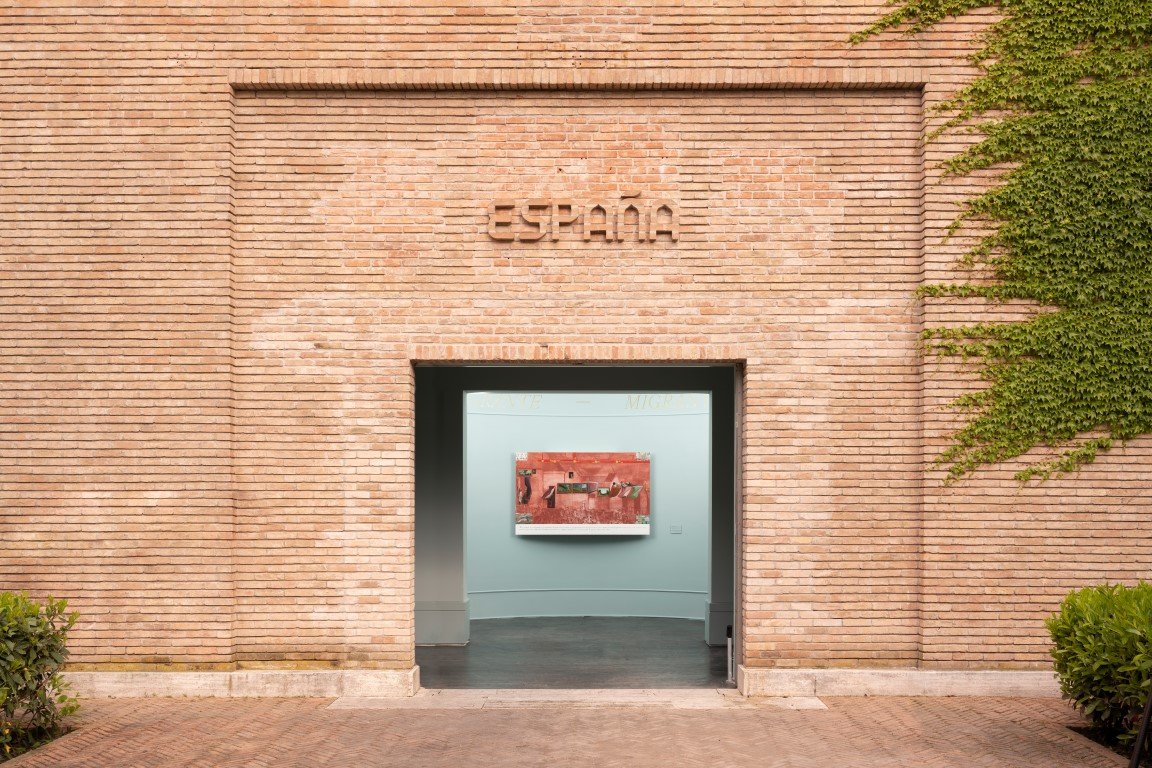
Migrant Art Gallery
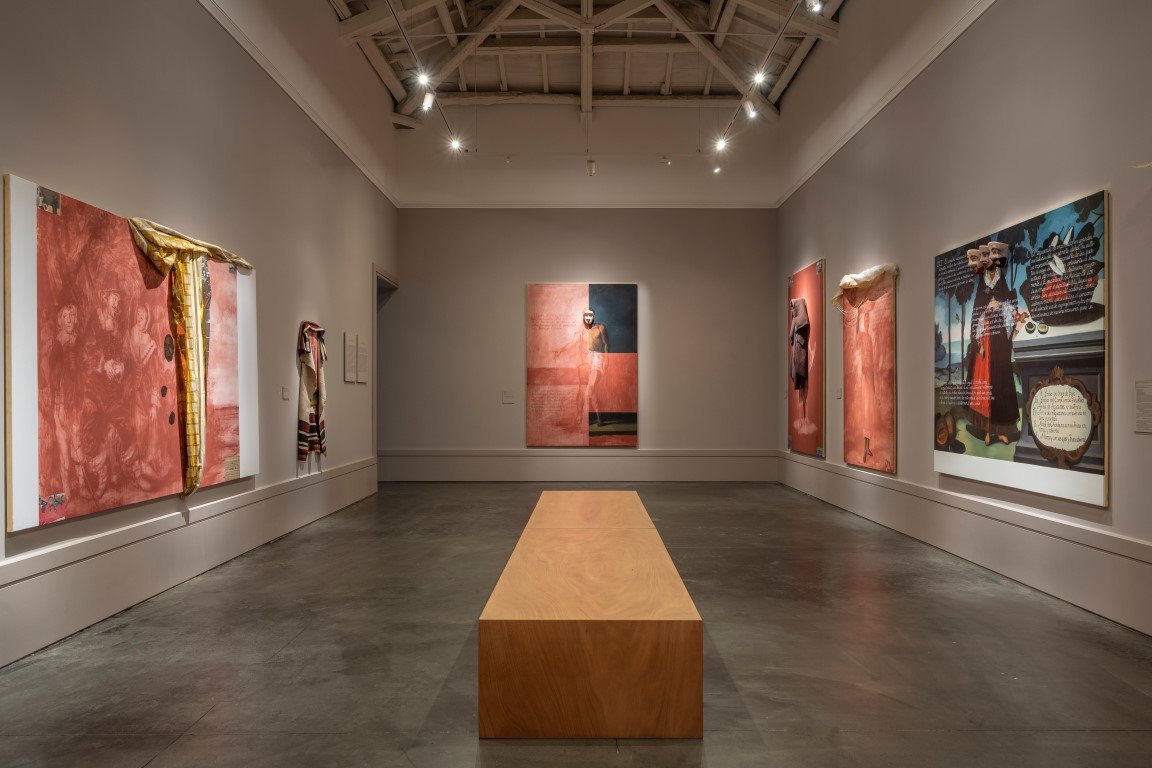
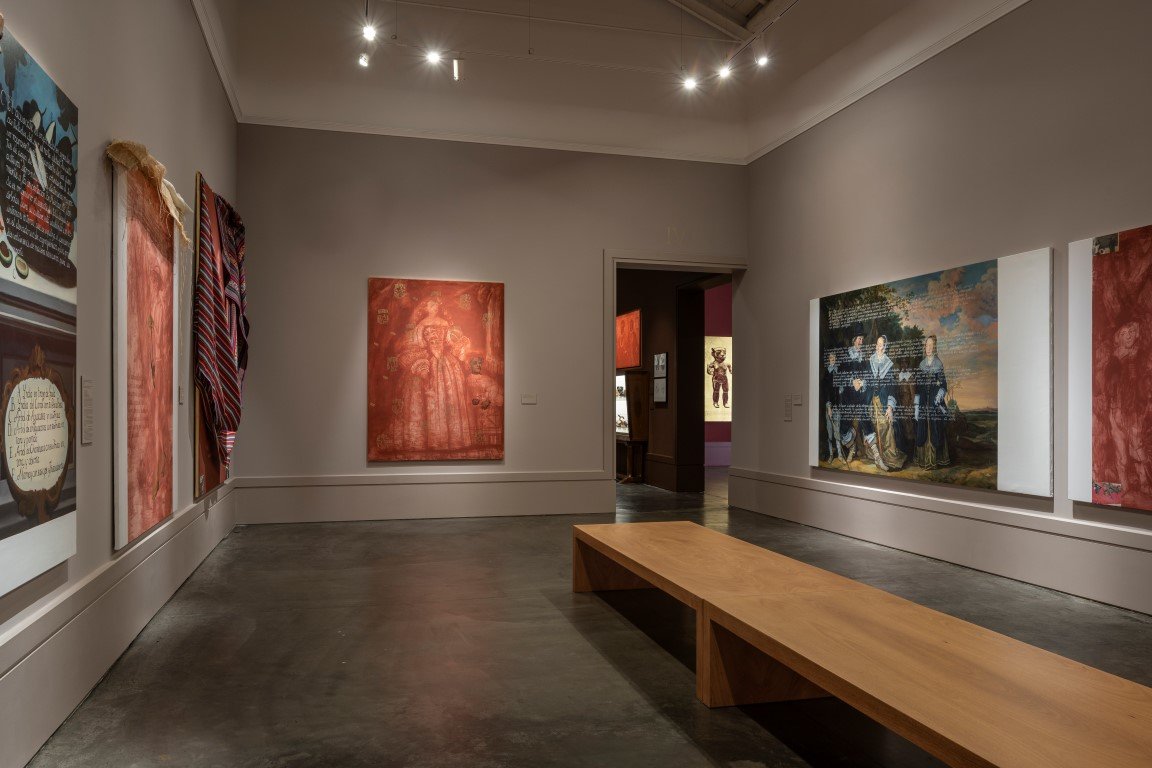
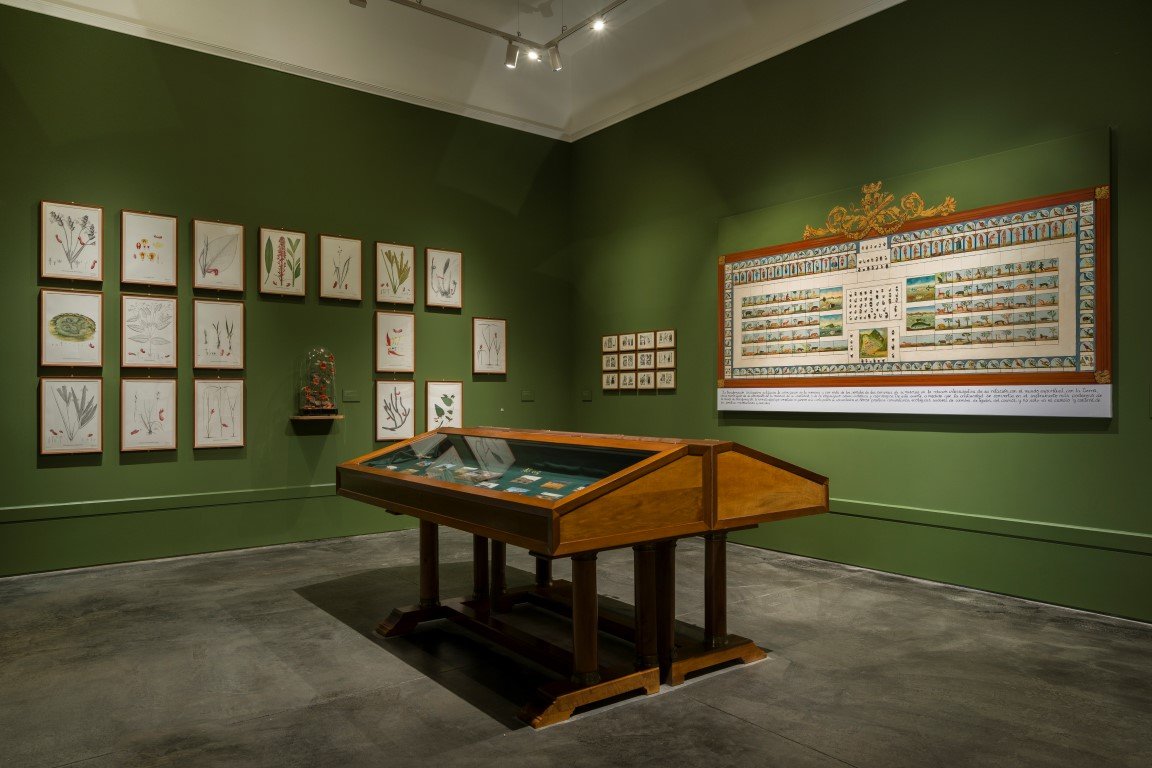
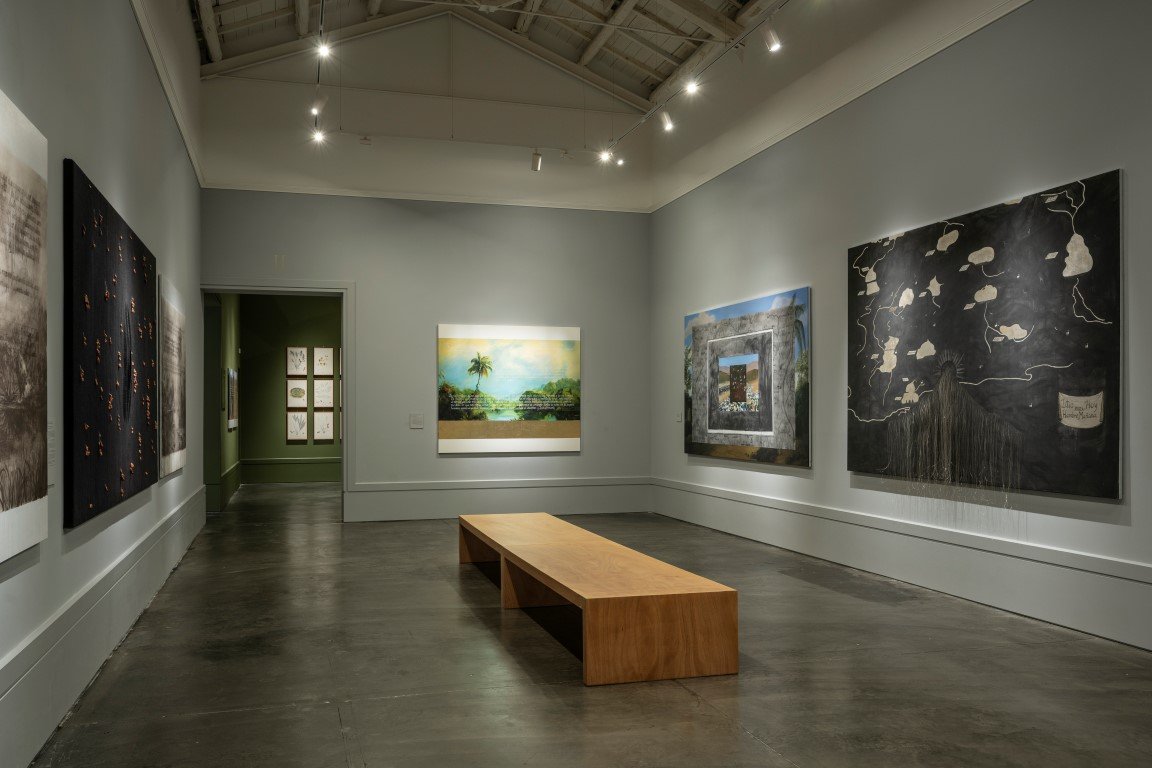
Spanish Pavilion, Venice Biennale, 2024
Venice, Italy.
National Library of Spain, 2025
Madrid, Spain
Although we believed the pandemic would serve as self-critique or a slowdown, we have unfortunately experienced over the course of these four long years that European countries have continued to weave that so-called extractive coloniality. If not, let’s look at how many European companies, alongside American, Canadian, etc., operate freely in the «ex-colonies» by buying off politicians and financiers, carrying out projects with high environmental and human risk—which would not be permitted in their home countries—shielded behind words like support or solidarity, when the reality is based on the plain and simple exploitation of the human and material «resources» of territories disadvantaged in terms of their sovereignty.
But today, Europe and its notions of hegemony are succumbing to the narcissistic mirage of Eurocentrism. This is not without the effort and power coming from outside its borders, but also due to the demands of internal forces. Perhaps because some of us within Europe have begun to understand that reflection and the influence of the «continent of monotheistic neurosis. The continent of control and of moral judgment upon the world,» as the Argentine anthropologist Rita Segato calls it. In the midst of this neurosis, we observe, more than ever, how hegemonic notions have shaped the museum upon which our heritage is based. Not only with the will for cultural extractivism, but also, in many cases, as devices that culturally normalize the violence of those identity plunders.
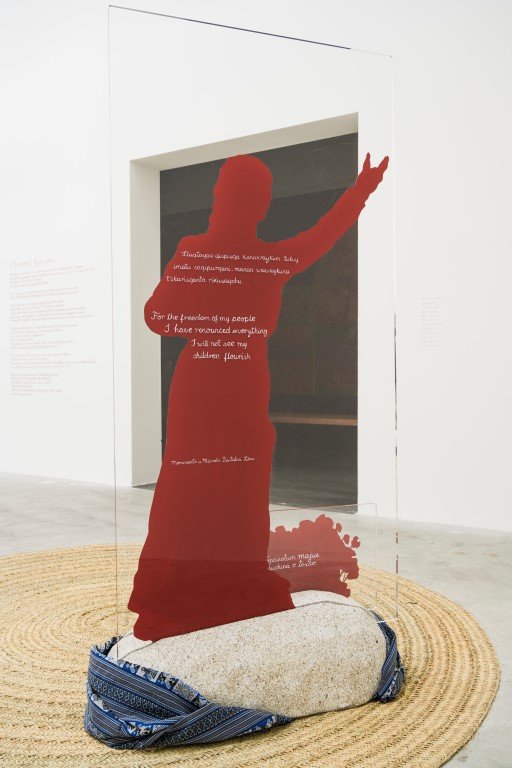
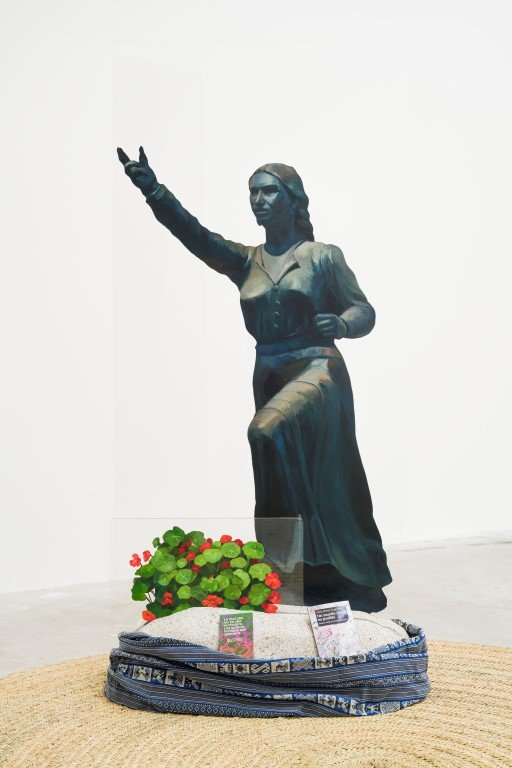
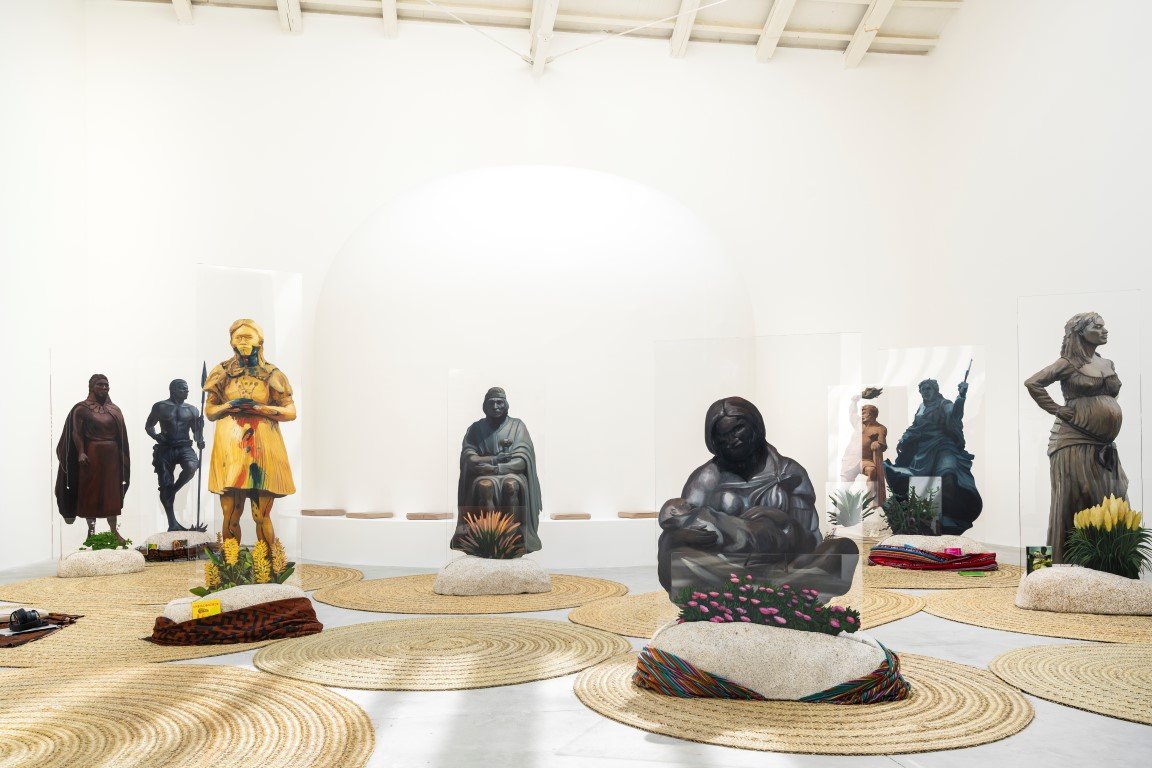
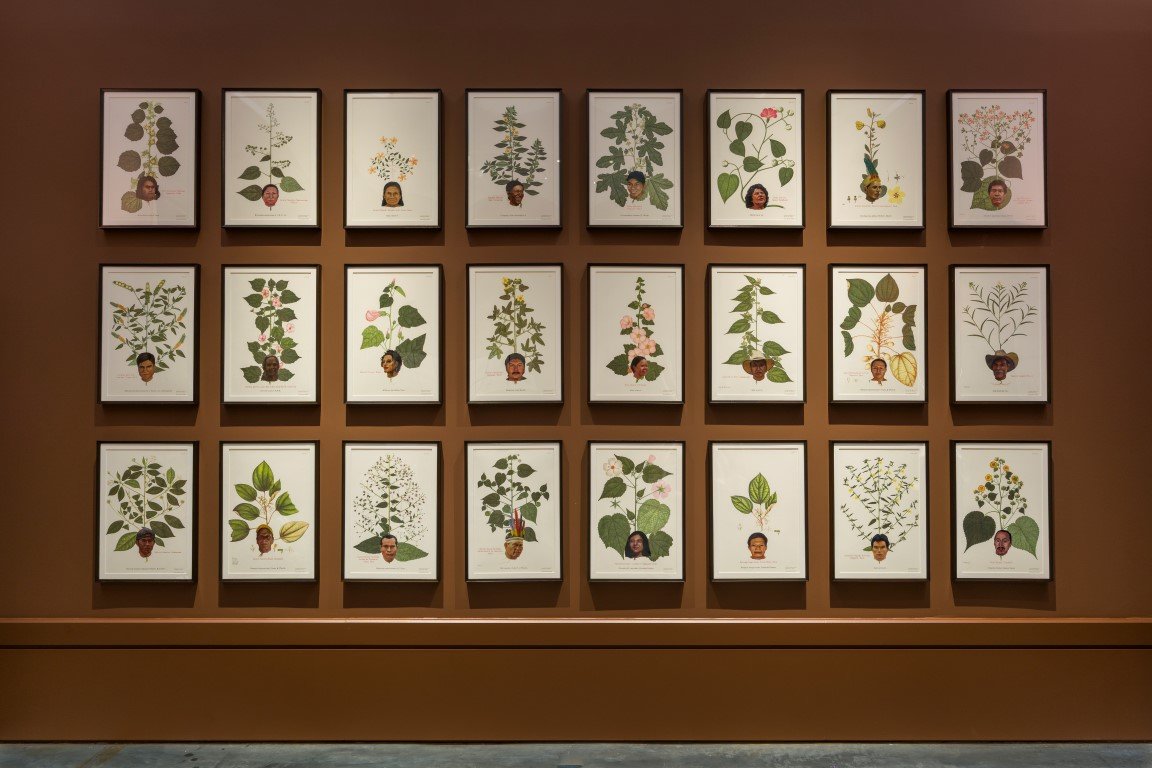
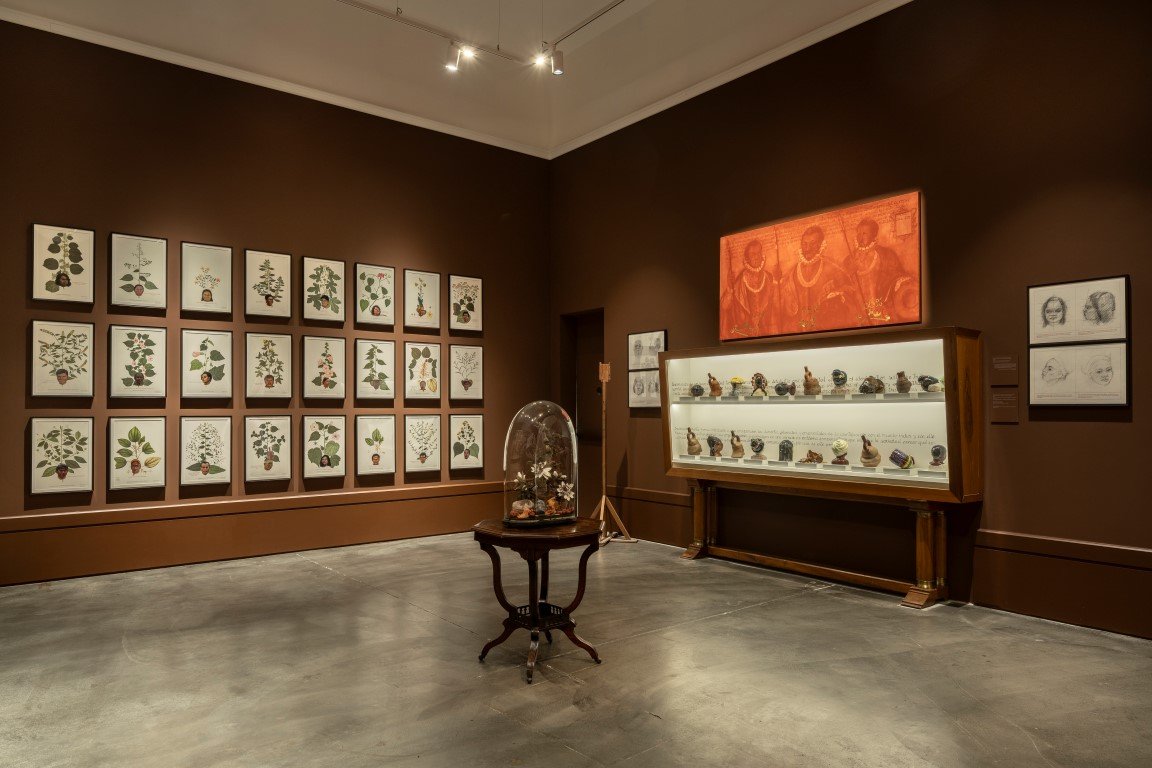
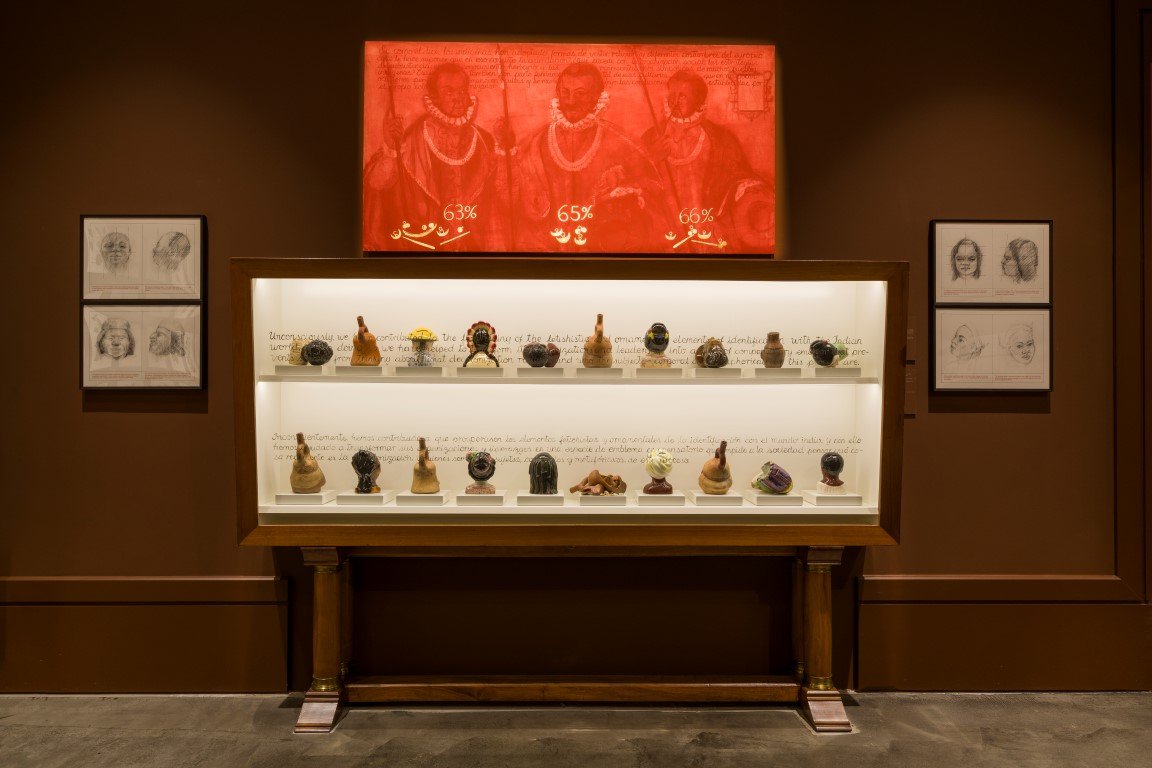
Pinacoteca Migrante aims to highlight that violence and simultaneously seek forms of historical reparation. This new institution created by the artist transforms the Spanish Pavilion into a historical pinacoteca of Western art, where the notion of «migration,» in its multiple facets, is the protagonist. The Western concept of a pinacoteca, which was also exported to the former colonies, is inverted by exposing a series of narratives that were historically silenced. In this way, Pinacoteca Migrante revises the protocols of accessibility, diversity, and sustainability, to update an institutionality that assumes contemporary contexts related to racism, migration, or extractivism in museums. The protagonists are the migrants, both human and non-human: living organisms, plants, and raw materials that often made the round trip by force. In its title, the new institution highlights how migration, like coloniality, is a phenomenon that is not only human, and how both continue to be uprooted from their ecosystems for the benefit of a few.
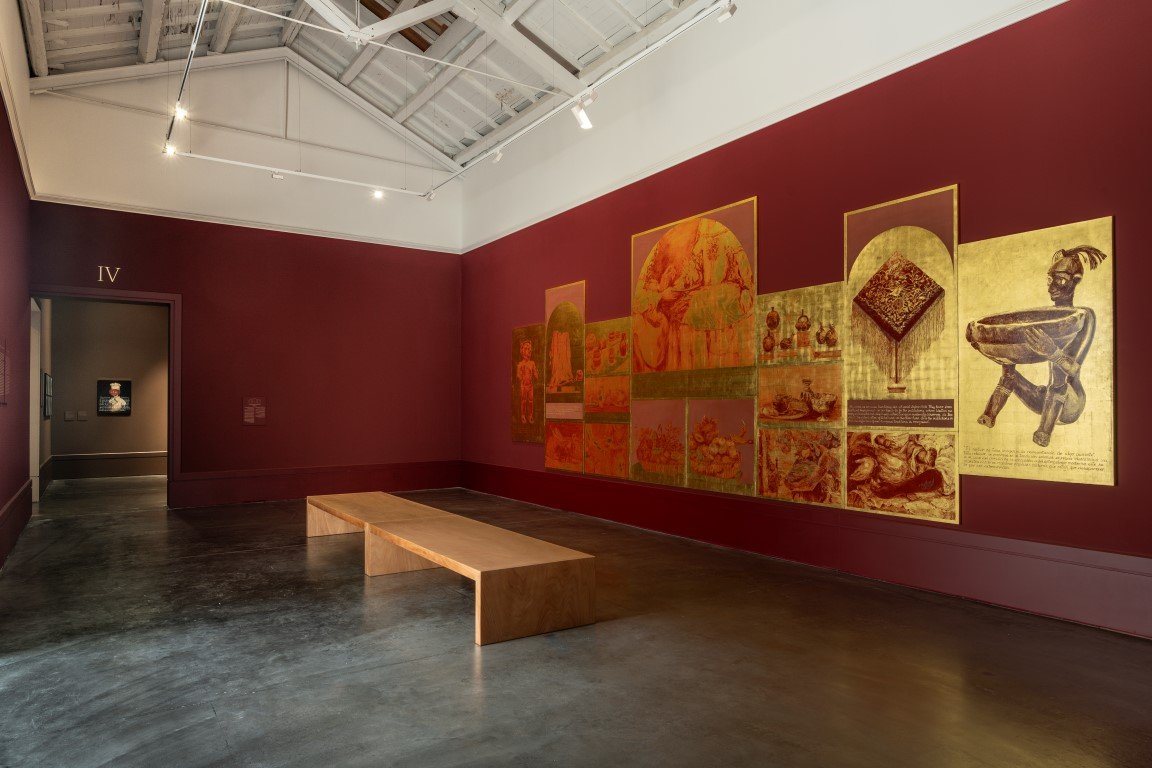
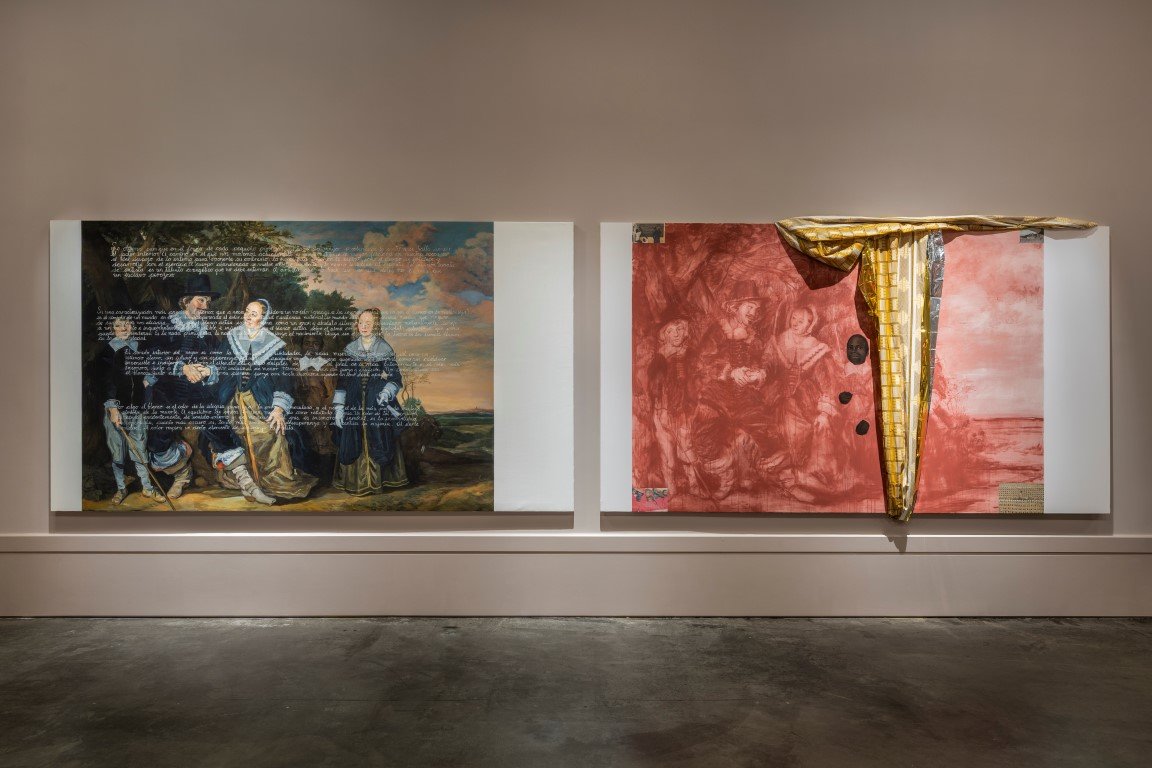
The extensive research carried out by Gamarra Heshiki is reflected in more than a hundred new paintings whose starting point are artworks belonging to the heritage of collections and art museums throughout Spanish territory, from the era of the Empire to the Enlightenment. Each work interferes with the lack of de-colonial narratives in museums and analyzes the biased representations between colonizers and the oppressed. It intertwines sociology, politics, art history, and biology to provide a reinterpretation where the historical consequences, often ignored, are linked to our contemporary context.
While the central focus of this Migrant Art Gallery takes the museum as a narrator of grand narratives in the form of a painting gallery, its roots run deep into the modes of representation found in various pictorial genres within our museum and art gallery collections in Spain. The monolithic construction of nation-states has been based on the destruction of other forms of social organization. To this end, narratives of civilization and evangelization have been created, framing an unjust exchange where the debt for this «initial progress» grows incessantly. Paradoxically, it is the goods from the so-called Third World that sustain the progress of the First World, which is later returned, either as merchandise or as waste.
These narratives of civilization have been written and imagined by creating recognizable models of what is aspired to, and on this plane, painting has been one of the most powerful creators of narratives. It has achieved this not only by imposing itself over other forms of visuality but also by creating a single, unified past—a fixed place to which one can return to project the future whenever the present destabilizes these constructs. All the symbolic capital distilled by pictorial representation is embodied nationally in what European art galleries represent, and also on regional or local scales, all of them indebted to the same hegemonic script.
We can trace these mechanisms in the genres of painting—landscape, portraiture, still life—that we have naturalized as truthful and which carry with them criteria of superiority and individuality linked to our way of organizing the world. Colonization processes have imported and imposed these ways of «seeing,» and in these other territories, these images have been reworked, returning to their place of origin and now creating interferences and critical spaces from which we can escape that «normality» to understand ourselves as a particularity.
Agustín Pérez Rubio
Passage from the exhibition catalog «Pinacoteca Migrante,» pages 13 and 14.