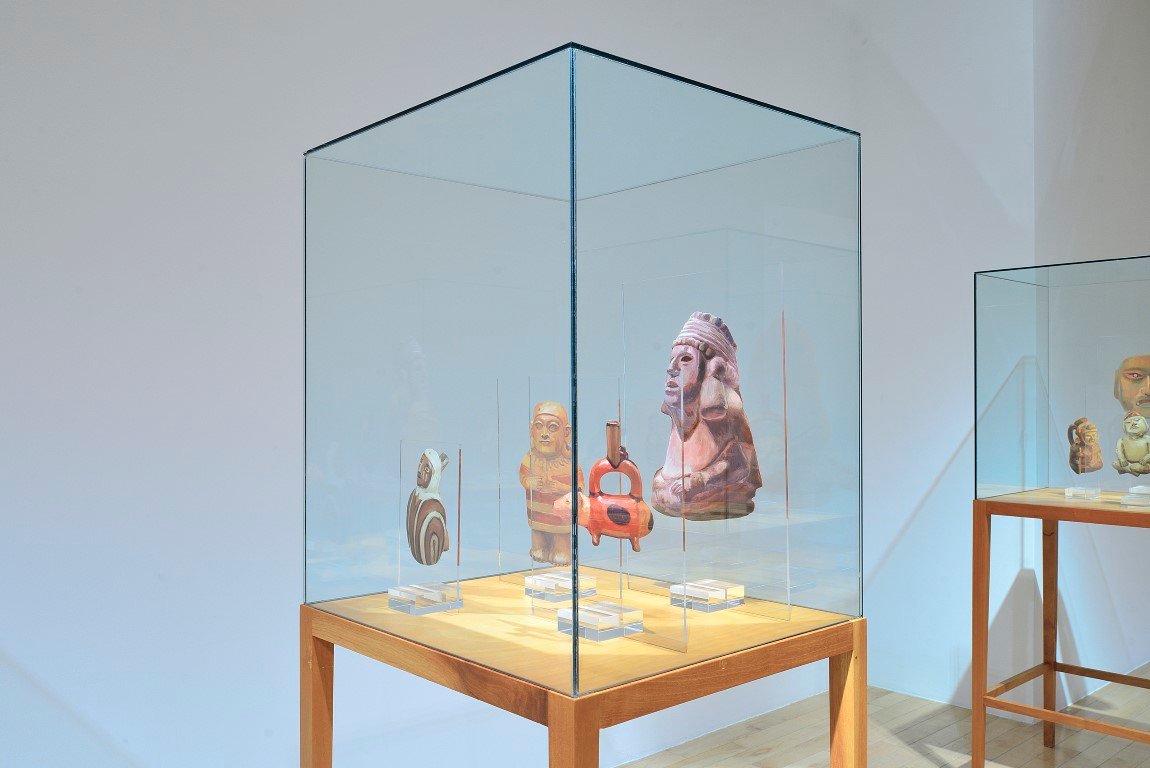
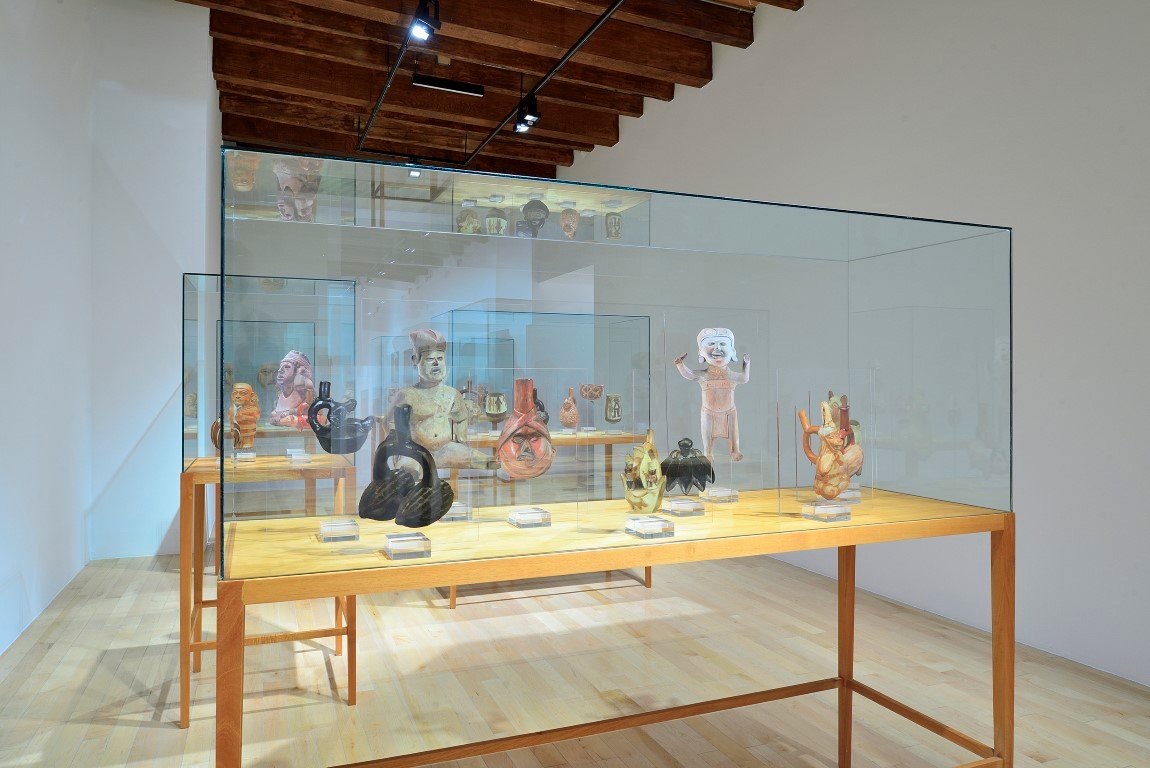
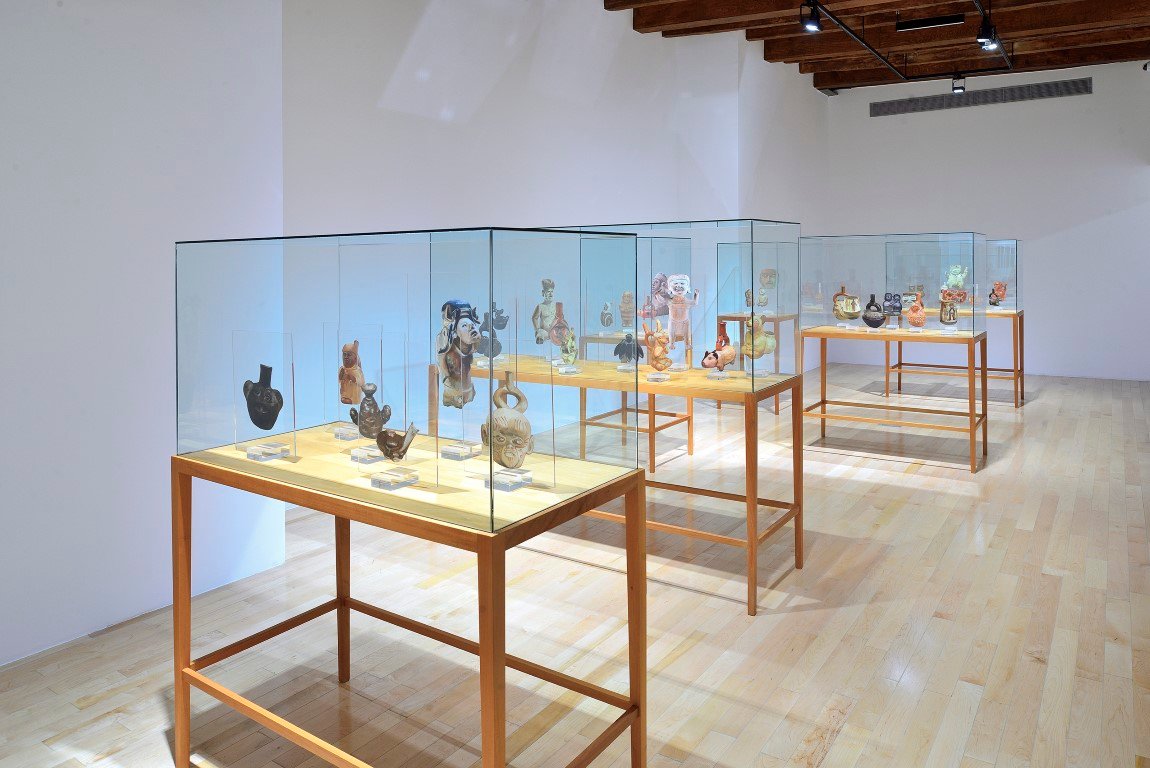
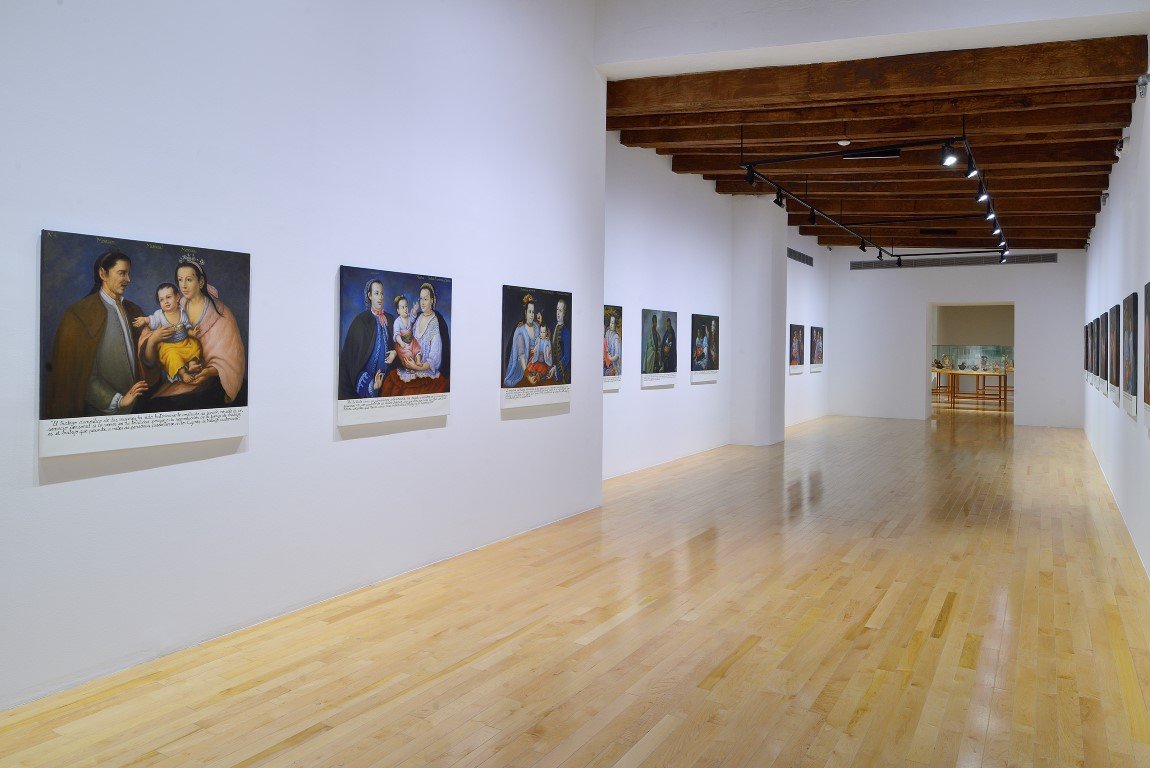
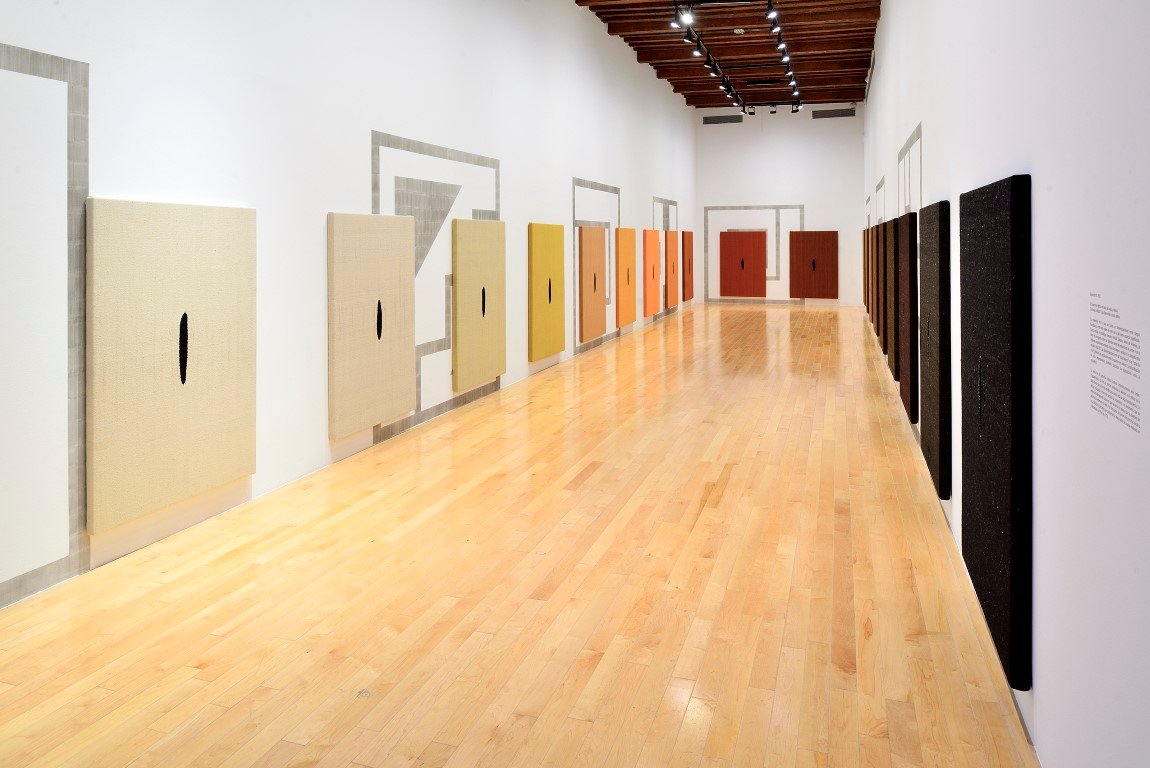
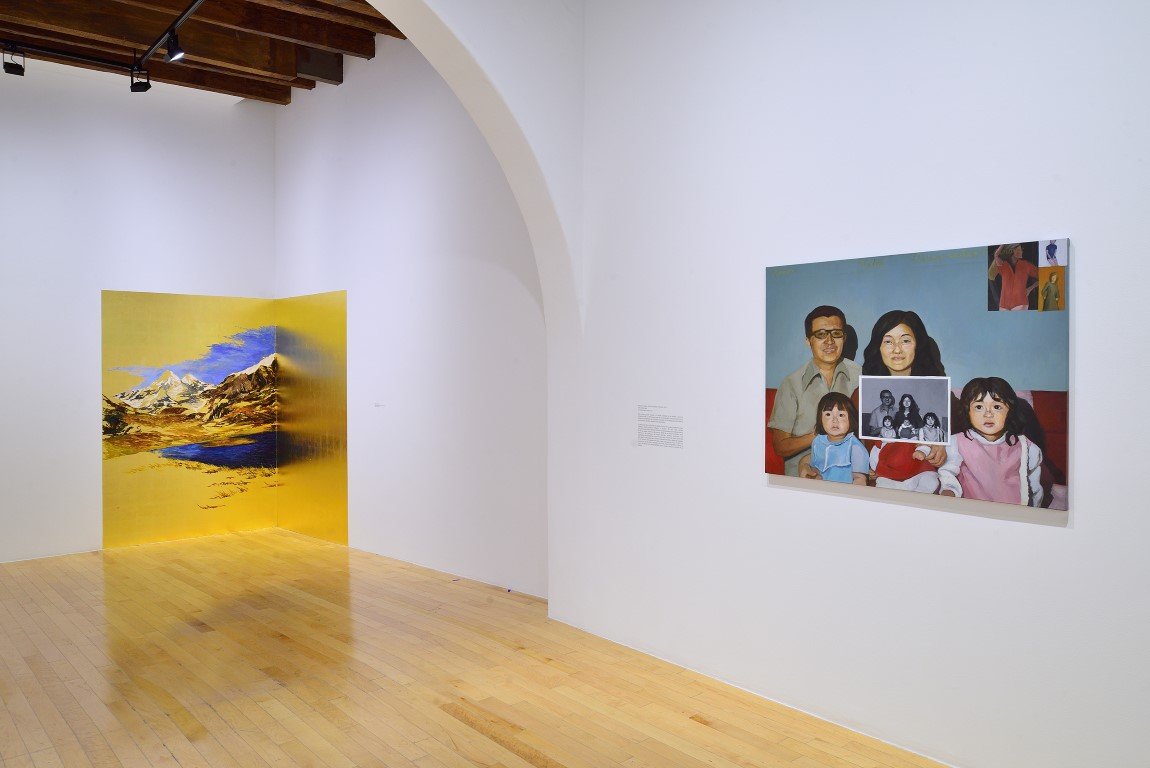
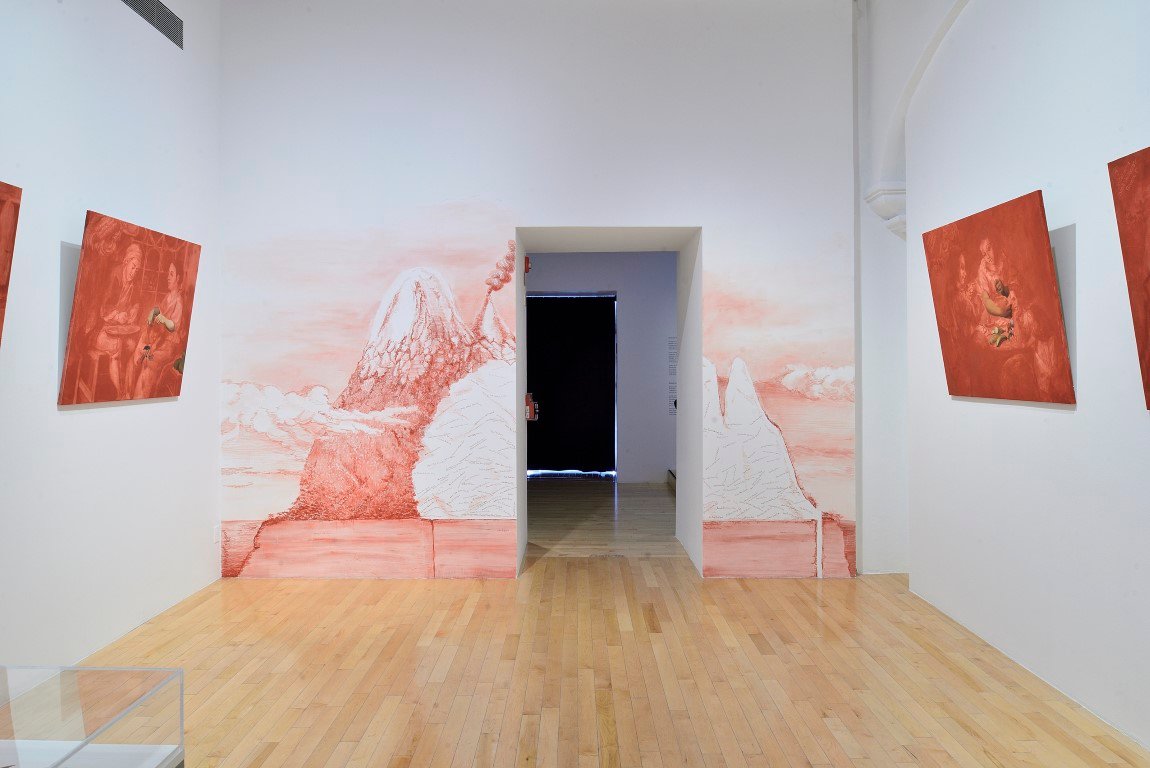
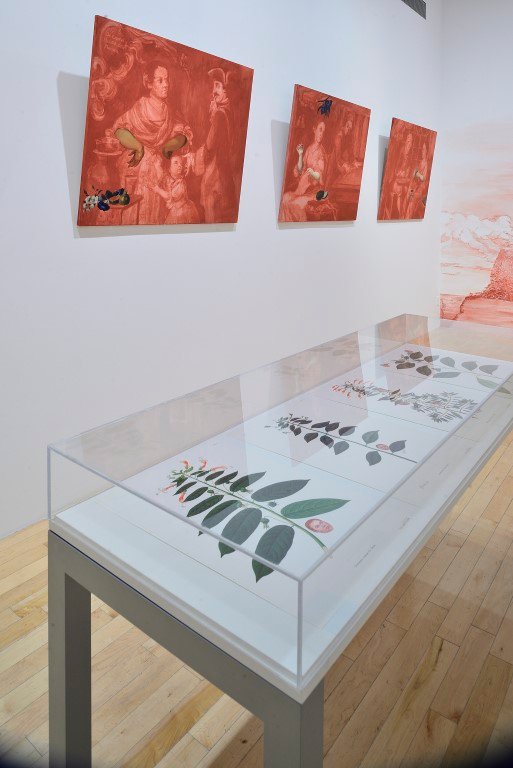
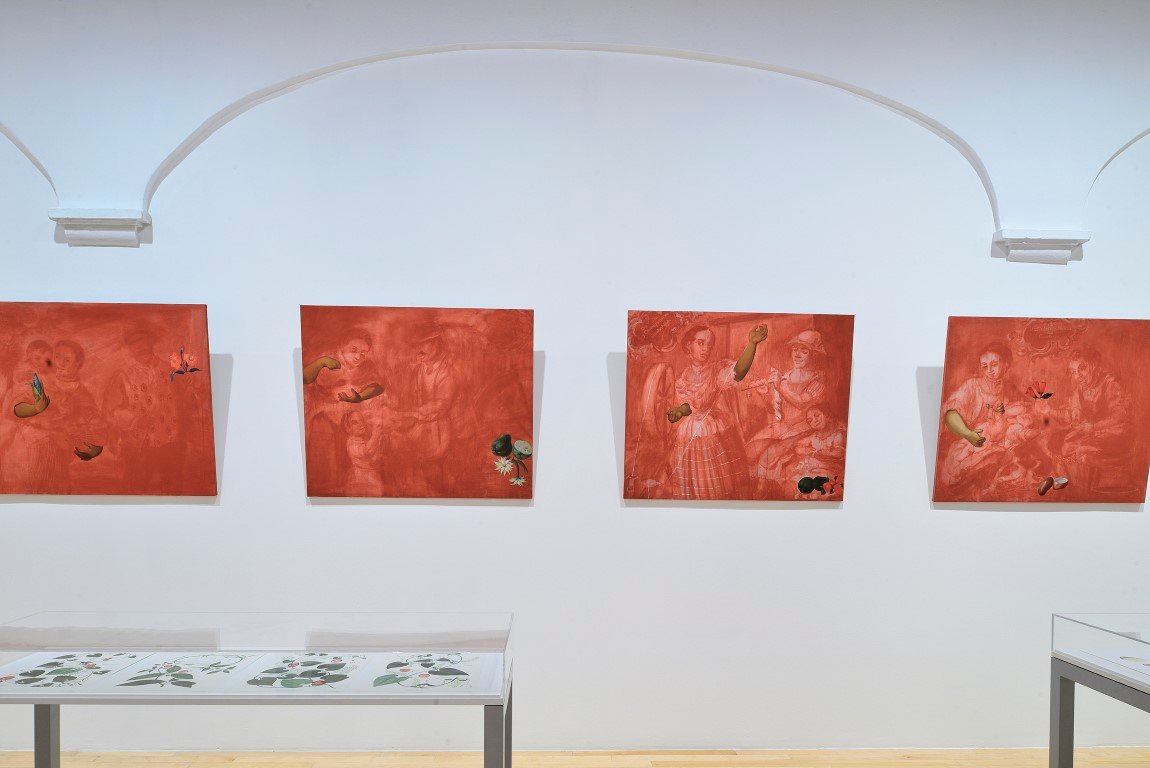
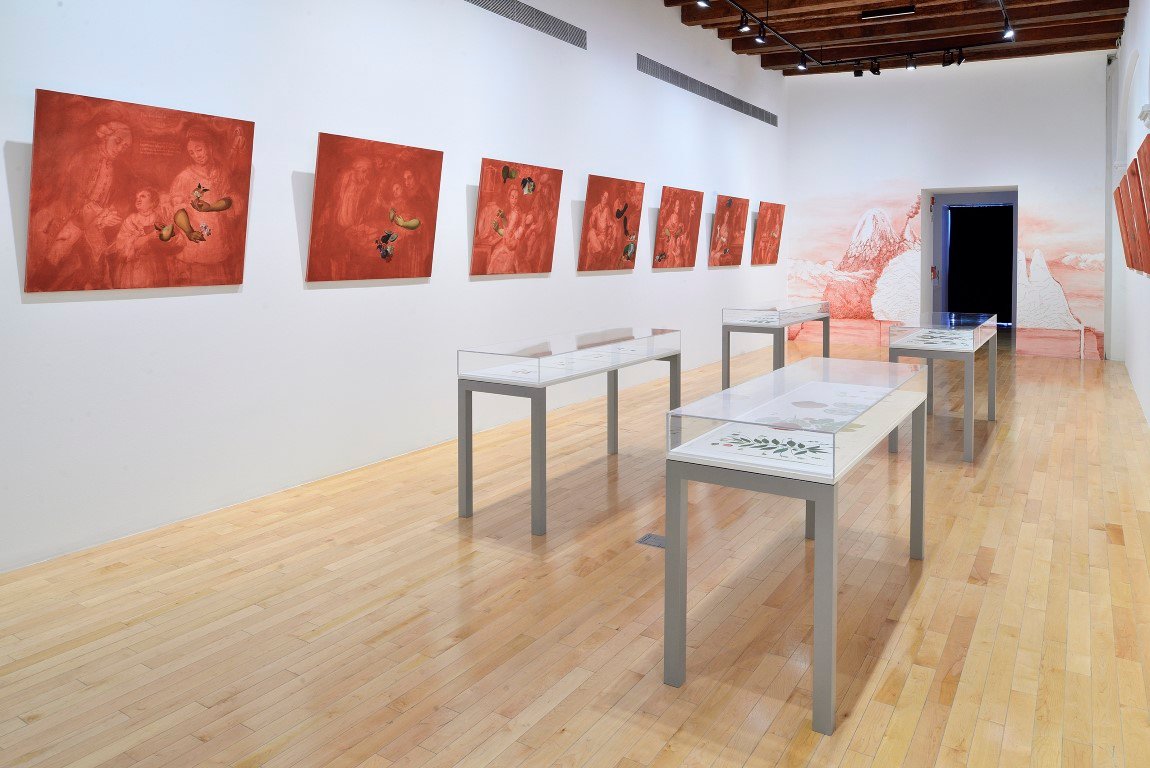
The order of the factors, 2022
Amparo Museum
Puebla, México
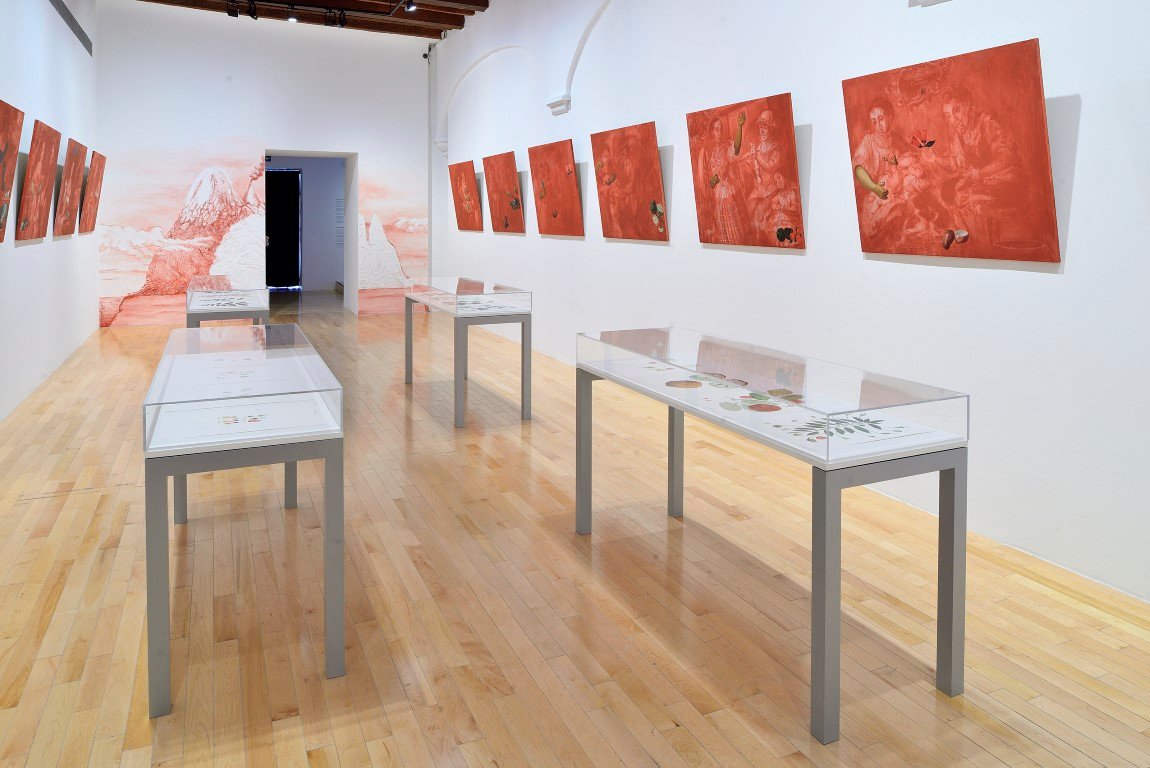
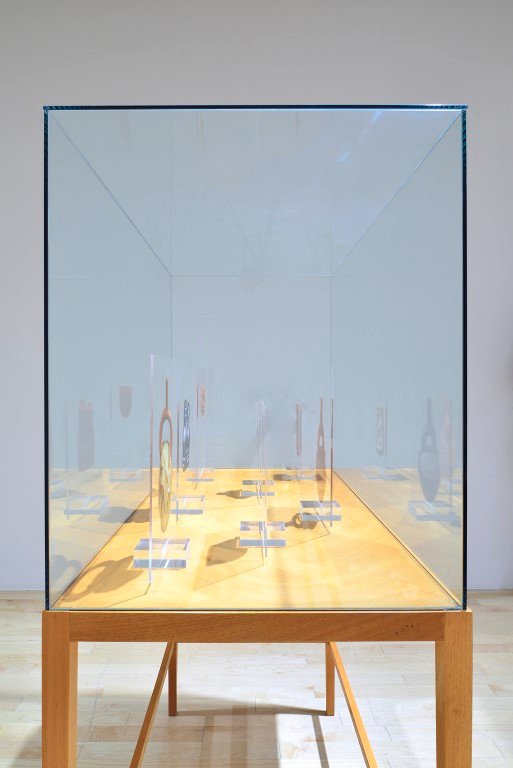
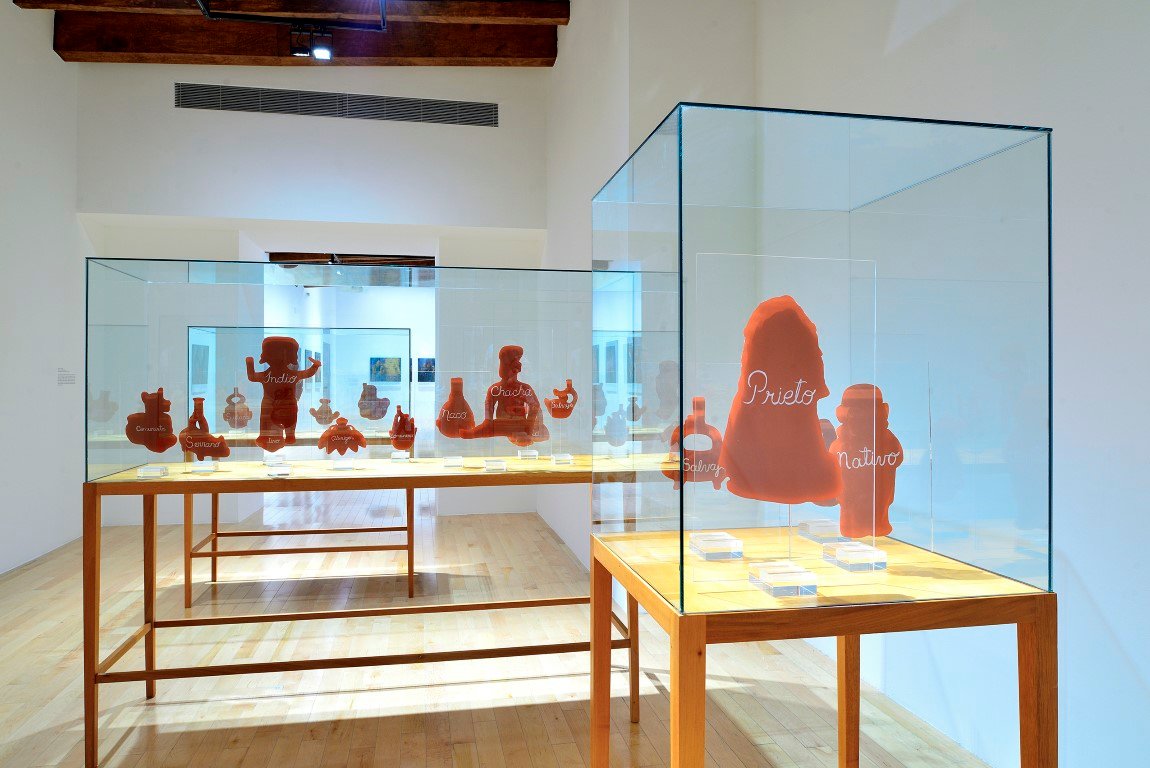
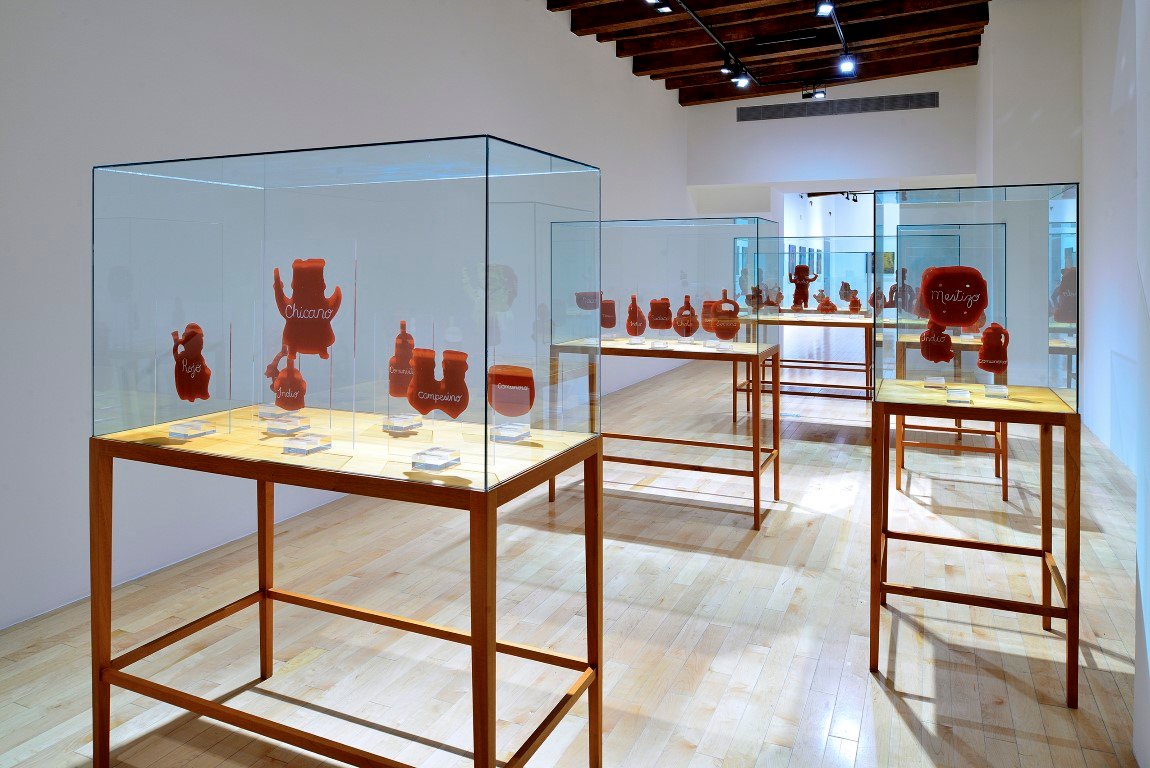
Through painting, Sandra Gamarra Heshiki (Lima, Peru, 1972) questions the mechanisms of representation of the art system and of the museum as an ideological apparatus.Using copies to provide access to particular cultural artifacts that have been abstracted from their contexts in the frame of the modern-colonial regime, the artist adopts a syncretic gaze whereby pre-columbian, colonial, modern, and contemporary material productions create friction with each other.
In The Order of Factors, Gamarra Heshiki focuses on the genre of casta painting, which was popular in eighteenth-century New Spain. The two series of sixteen and twenty paintings each illustrate racial classifications founded on the reproduction of the family. Guided by “blood purity,” they depict a hierarchical social organization with the purpose of establishing and maintaining spaniards and creoles in power. The series were produced primarily in Mexico City and Puebla, and the only known example made outside of what is now Mexico is from the Viceroyalty of Peru. This is the starting point from which Gamarra Heshiki draws connections between the social identities constructed in Peru and Mexico, linked to her own biography. From there, she indicates the forms of violence that emerged at the intersections of race, class, and gender in the
colonial order.
The western classificatory gaze that was systematized during the eighteenth century reaffirmed hierarchies and justified social, racial, and gender differences as “natural” categories. This gaze also constructed an otherness—that is, a difference from the western subject—through its exoticization. From this perspective, women and other racialized people were seen as “inferior,” “primitive,” or “backward;” like nature itself, these people were regarded as resources available to be exploited. Revisiting the order that gave rise to these forms of violence allows us not only to trace how they have endured into the present, but also to imagine possibilities for change.
Pamela Desjardins